
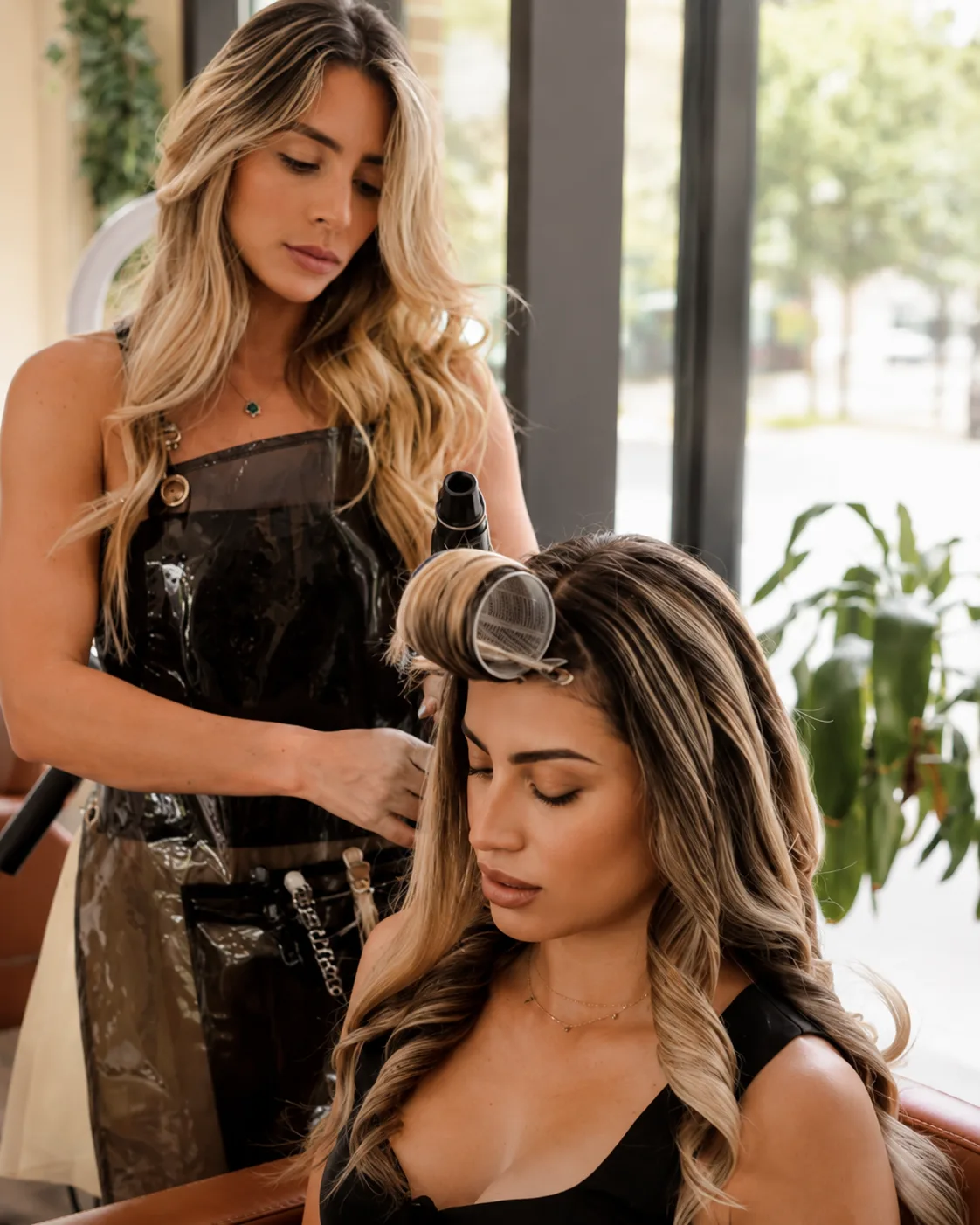
Tape-in extensions are not high-maintenance, but they aredetail-sensitive — a handful of small daily habits are the entire difference between a set that looks flawless for months and one that slips, tangles, or dulls within weeks. None of it is complicated. It just has to be consistent.
This is the exact routine I send home with every tape-in client, written out properly rather than rushed through at the end of an appointment.
Nobody ruins a set of extensions on purpose. It is always a handful of small habits, repeated for weeks, that adds up.
The first 48 hours
This window matters more than anything that comes after it. Keep your hair completely dry — no washing, no sweaty workouts, no swimming. Skip heat styling entirely. Sleep with your hair in a loose braid or low ponytail so nothing tangles overnight. The adhesive needs this time to fully cure, and rushing it is the single most common cause of early slipping.
Wash day
- Wash 2 to 3 times a week — not daily. Overwashing dries out the hair and stresses the bonds unnecessarily.
- Wet from mid-length to ends first, keeping water away from the tapes as much as possible.
- Apply shampoo to the scalp only, massaging gently in a downward motion — never scrub back and forth across the tapes.
- Rinse thoroughly, then apply conditioner only from mid-shaft to ends, never on the tape itself.
- Use dry shampoo at the roots between washes to manage oil without disturbing the bonds.
Products worth choosing carefully
Oils and silicones are the main threat to tape-in adhesive — they break the bond down gradually, which shows up as slipping weeks before it should. Sulphate-free, lightweight, silicone-light formulas are the standard I recommend. A weekly hydrating mask on the mid-lengths and ends keeps the extension hair looking healthy without ever touching the roots.
Brushing and drying
Brush at least twice a day with a loop brush or an extension-specific brush, always starting at the ends and working up while holding the roots for support. Never brush aggressively through wet hair. Pat extensions dry rather than rubbing, and air-dry or use a diffuser on low heat when possible — a full blow-dry is fine, just keep the nozzle moving and avoid parking heat directly on the tape.
Heat styling
Thermal tools are safe on tape-ins as long as you respect two rules: stay at or below 300°F, and keep the tool away from the bond itself. High heat right at the tape can soften the adhesive enough to cause slipping, even if the rest of the install is perfect.
Sleep, workouts, and swimming
Loosely braid or tie your hair before bed, and a silk or satin pillowcase reduces overnight friction and tangling. For workouts, tie hair back and wash out sweat within 24 hours to prevent buildup and matting at the roots. Swimming is fine with a swim cap or a protective spray, followed by a thorough rinse afterward — chlorine and salt water are both hard on the tape bonds if left to sit.
The Vancouver-specific habit most guides skip
Our water runs harder than average, and hard water leaves mineral buildup on extension hair faster than it does on your own — extension hair has no scalp oils to help it recover, so the dulling shows up sooner. I recommend a gentle clarifying wash every few weeks to lift that buildup, especially through our dry winters and humid summers, when the hair is working overtime either way.
The clients who get a full year out of their hair are not doing anything extreme. They are just consistent, and they never skip a move-up.
The one non-negotiable
All of the above matters, but none of it replaces your scheduled move-up appointment. Once tapes have grown out past the recommended window, matting risk goes up regardless of how well you have followed everything else. If you want the full breakdown of why that timeline exists, read how long tape-in extensions really last. And if you are weighing whether extensions are right for your hair at all, here is the honest answer on damage. When you are ready, book a consultation and we will build a routine around your specific hair.
Frequently asked
How soon after getting tape-ins can I wash my hair?
Wait a full 48 hours before the first wash. This gives the adhesive time to fully cure. Washing, heavy sweating, or swimming too soon can weaken the bond before it has properly set.
What products should I avoid with tape-in extensions?
Avoid anything oil-heavy or silicone-rich near the tapes — oils break down adhesive over time. Sulphate-free, lightweight shampoos and conditioners applied from mid-length down are the safest choice. Keep conditioner and masks off the roots entirely.
How often should I brush my extensions?
At least twice a day, using a loop brush or extension-specific brush. Always start at the ends and work upward, holding the roots for support so you are not pulling on the tapes themselves.
Can I use a curling iron or straightener on tape-ins?
Yes, but keep the temperature at or below 300°F and keep heat tools away from the tape itself. Excess heat right at the bond can soften the adhesive and cause slipping.
Does Vancouver weather affect how I should care for my extensions?
Yes. Our water runs harder than average, which leaves mineral buildup on extension hair faster than on your natural hair, and our winters are dry while summers turn humid. I recommend an occasional clarifying wash and a weekly hydrating mask to counter both.
Ready to talk through your hair?
Book a consultation