
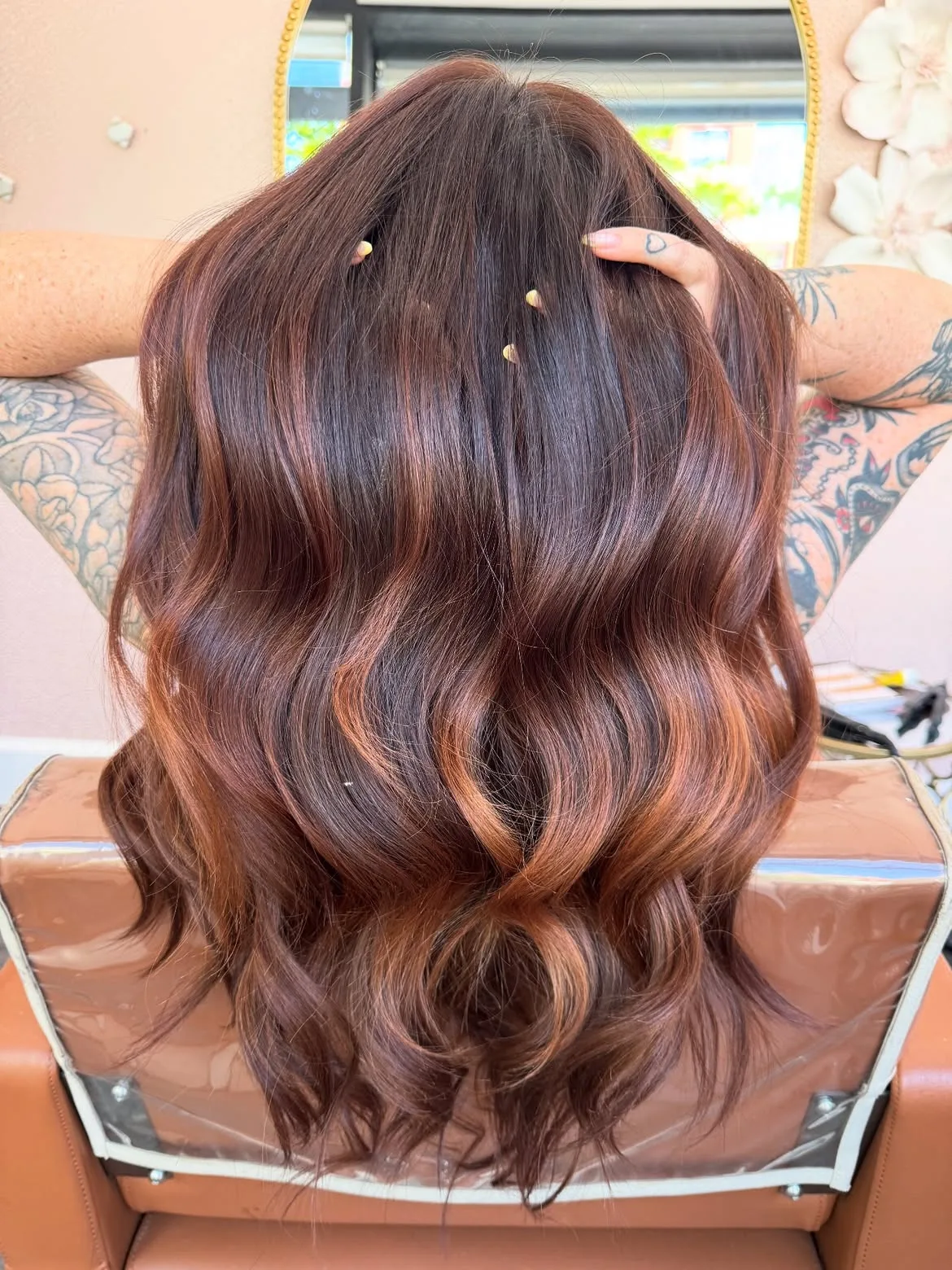
There is no universal winner between K-tip and tape-in extensions — I say this to almost every client who asks. K-tips suit fine-to-medium hair, frequent updos, and clients who want the most natural movement.Tape-ins suit very fine or sensitive scalps, clients who wear their hair down, and anyone who wants a quicker install. The right answer depends on your hair and your week, not a general rule.
I offer both methods for exactly this reason — I would rather match you to the right technique than talk you into the one I happen to prefer. Here is how I actually walk clients through the decision.
The question is never which method is better. It is which method disappears into your specific hair.
How each method actually works
K-tip (keratin bond)
Individual strands, each capped with a small keratin tip, are fused to sections of your natural hair using a heated tool. There is no tape, no glue — the bond is the same protein your hair is made of. Because each strand is placed one at a time, the bonds can be made very small, which is what gives K-tips their natural, undetectable movement.
Tape-in
Thin wefts of hair, pre-attached to medical-grade adhesive tape, are sandwiched around small sections of your natural hair — no heat, no fusing. They lie completely flat against the scalp, which is what makes them so seamless for fine hair and comfortable for sensitive scalps.
Where they actually differ
Longevity between appointments. K-tips are typically reworked every 3 to 4 months. Tape-ins need a move-up every 6 to 8 weeks as your natural hair grows out from under the bond. Neither is "worse" — it is fewer, longer appointments versus more frequent, shorter ones.
Install time. A full K-tip set takes longer to place, usually 3 to 5 hours depending on the amount of hair. A tape-in set is quicker, generally 1.5 to 2.5 hours.
Heat and scalp sensitivity. K-tips involve a heat tool at the bond. Tape-ins involve none. If you have a sensitive scalp or you are simply not keen on sitting through a longer heat-based install, tape-ins are the more comfortable choice.
Movement and styling. K-tips move the most like your own hair because each bond is tiny and placed individually — this is why they are my first recommendation for clients who wear their hair up often. Tape-ins are flatter by design, which is what makes them so invisible when your hair is down, but they can be slightly more noticeable pulled back tight.
My honest recommendation by hair type
Fine-to-medium density, wants updos and ponytails: K-tip. The small individual bonds give you the most natural root movement and disappear completely when your hair is up.
Very fine or low-density hair: Tape-in, usually. Even a small K-tip bond can be faintly felt or seen in hair this fine. Tape-ins lay flat and distribute weight across a wider section, which is gentler and less visible.
Sensitive scalp, or simply want a shorter appointment:Tape-in. No heat, quicker install, and easier on a scalp that reacts to tension or warmth.
Wants the least frequent salon visits: K-tip. Three to four months between reworks beats six to eight weeks if your schedule is the deciding factor.
What actually decides it at a consultation
On paper this looks like a simple checklist, but in the chair it is more nuanced — your natural density up close, how your hair falls, whether you have had extensions before and what worked or did not, and honestly, your week-to-week routine. That is exactly what a proper consultation is for, and it is why I would rather look at your hair in person than guess from a description.
Most of my clients are surprised the decision has nothing to do with which method looks more expensive. It is entirely about what your hair can carry comfortably.
If you are further along and thinking about lifespan specifically, read how long tape-in extensions really last. And if your hair runs on the finer side, the best extensions for fine or thin hair goes deeper into that specific decision. Either way, the fastest way to a real answer is a consultation, where I can look at your hair directly.
Frequently asked
Which lasts longer, K-tip or tape-in?
K-tips typically go 3 to 4 months between reworks. Tape-ins need a move-up every 6 to 8 weeks, but the same hair is reused for 6 to 12 months. So tape-ins need more frequent appointments; K-tips need fewer, larger ones.
Are K-tips or tape-ins better for very fine hair?
It depends how fine. For most fine hair, K-tips work beautifully because the bonds can be made small and move naturally. But for very fine, low-density hair, even a tiny K-tip bond can be faintly visible when the hair is pulled back — for those clients I usually recommend tape-ins, which lie flat and disappear.
Which is more comfortable to sleep in?
Most clients find tape-ins slightly more comfortable at first because there is no bond to feel with your fingers. K-tips feel more noticeable for the first few days but settle in completely once you are used to them.
Can I switch between methods later?
Yes. Plenty of my clients start with one method and move to the other as their hair, lifestyle, or preferences change. There is no downside to trying both over time — a consultation before each set is the right way to decide.
Which method is better for updos and ponytails?
K-tips win here. Because each bond is small and individually placed, the hair sits close to the scalp and moves naturally when pulled up, so there is nothing to catch or show.
Ready to talk through your hair?
Book a consultation