
Fine and thin are not the same thing, and mixing them up is the most common reason clients end up in the wrong extensions. Fine describes the width of each strand. Thin describes how many strands you have.Once we know which one — or both — we are dealing with, choosing the right method stops being a guessing game.
This is one of the hair types I work with most, and it is genuinely my favourite kind of consultation, because there is a real, specific answer for it rather than a generic recommendation.
More hair is not the goal. The right hair, placed correctly, is.
Fine vs thin: why the distinction actually matters
Fine hair has a smaller strand diameter — it can be dense (lots of thin strands) or sparse. Thin hair means fewer strands overall, regardless of how thick each one is. Most people who feel their hair is "not enough" actually have some combination of both, and it changes what your hair can comfortably carry.
Dense-but-fine hair can usually hold more extension weight than it looks like it can, spread across more sections. Genuinely thin hair — fewer strands, less coverage at the root — needs a lighter, more carefully placed approach no matter how coarse each strand is.
What actually works
Tape-in extensions
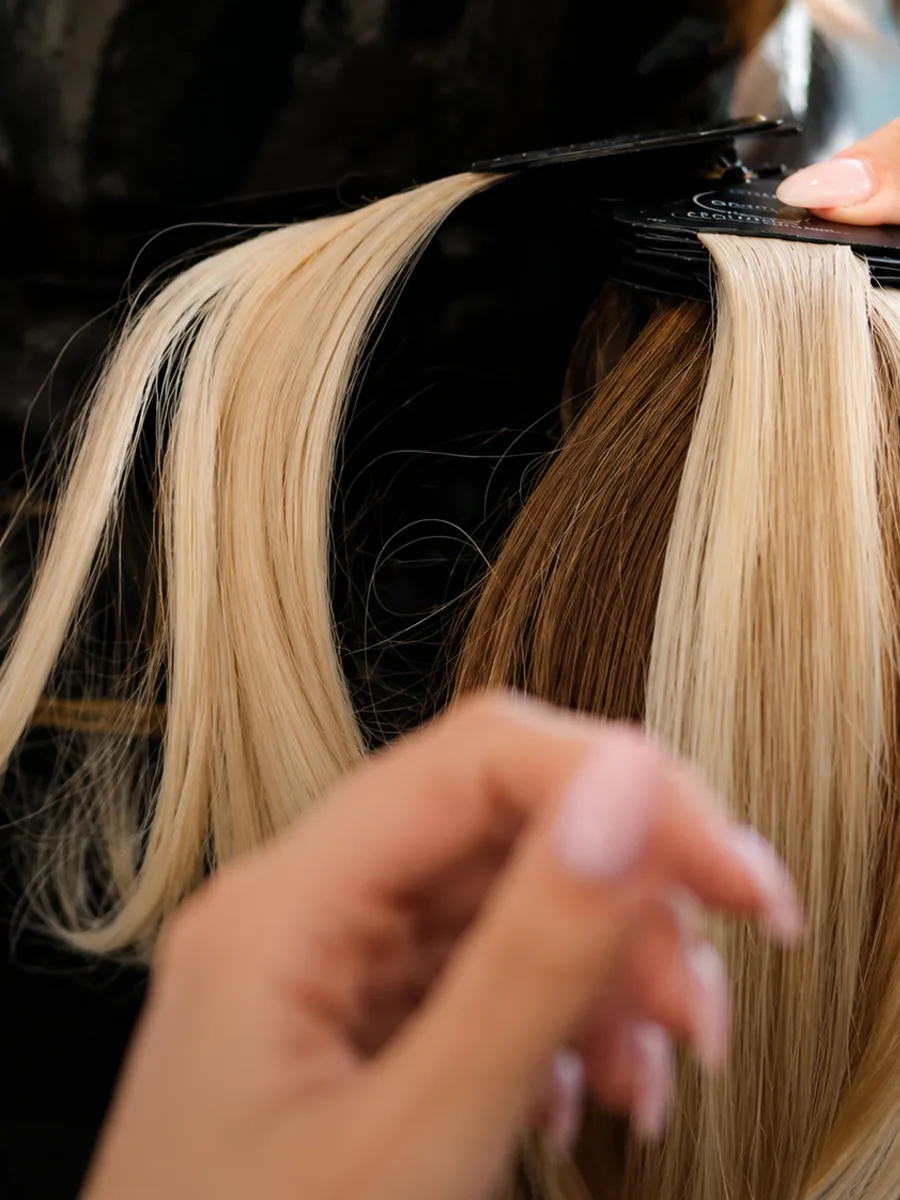
Consistently my first recommendation for very fine or lower-density hair. The wefts lie flat and spread their weight across a wide, flat section instead of pulling from concentrated points, which is gentler on delicate roots. Asking for single-sided tape rather than double-sided also cuts the weight of each weft roughly in half — a detail worth knowing if your hair runs especially fine.
K-tip extensions, kept small
K-tips work very well for fine-to-medium hair when the bonds are made small and placed carefully. The individual-strand approach means the weight is distributed one bond at a time rather than across a weft, and the movement is the most natural of any method. The caveat: if your hair is on the very finest end, even a small bond can be faintly felt or seen when your hair is pulled back — that is the moment I would steer you toward tape-ins instead.
What to avoid
Heavy clip-ins with large, stiff clips, large micro-link beads, and traditional sew-in wefts all place concentrated tension or weight on strands that cannot support it. They are not inherently bad methods — they are simply the wrong tool for fine or thin hair specifically, and they are where most of the extension-damage horror stories actually come from.
Getting the amount of hair right
The instinct is to ask for as much hair as possible. For fine or thin hair, that usually backfires — too much weight in too few sections looks heavier at the root and puts real strain on hair that cannot carry it. The better approach is less hair, placed more precisely, which reads as fuller and moves more naturally than an overloaded set ever will.
Quality matters just as much as quantity here. 100% Remy human hair blends into fine hair in a way synthetic or lower-grade hair simply cannot — the cuticle lies in one direction, so it catches light and moves the same way your natural strands do.
The best result I get on fine hair is almost always less hair than the client originally asked for — placed exactly right.
What I actually check at your consultation
Density at the root, how your hair falls and parts naturally, whether your scalp is sensitive, and how you actually wear your hair day to day. That combination — not a general rule about "fine hair" — is what tells me whether you are a tape-in client or a small-bond K-tip client, and exactly how much hair gets you fullness without overworking your roots.
If you are also deciding between methods more broadly, K-tip vs tape-in: which is right for your hair? walks through that comparison in full. And if you are worried extensions might harm fine hair specifically, I have written honestly about whether extensions actually damage your hair. The most reliable next step is always a consultation, where I can assess your density in person.
Frequently asked
What is the difference between fine hair and thin hair?
Fine refers to the diameter of each individual strand — fine hair strands are simply thinner. Thin refers to density — how many strands you have overall. You can have fine, dense hair or thick, thin hair. Many people have both, which is what makes hair feel flat and hard to add volume to.
Are tape-ins or K-tips better for fine hair?
Both can work well. Tape-ins lie flat and distribute weight across a wider section, which suits very fine or low-density hair especially well. K-tips work beautifully for fine-to-medium hair when the bonds are kept small — the deciding factor is usually how fine, not just fine versus not.
Will extensions make my fine hair look thinner?
No — done properly, the opposite happens. The right method and the right amount of hair for your density adds visible volume and coverage. The risk is only using too much hair or the wrong method, which is exactly what a proper consultation is designed to prevent.
What should I avoid if I have fine or thin hair?
Heavy clip-ins, large micro-links, and sew-in wefts all place too much weight or tension on delicate strands and are best avoided. Lightweight, properly placed tape-ins or small K-tip bonds in 100% Remy human hair are the safer, more comfortable choice.
How much hair do I actually need for fullness without looking overdone?
Less than most people expect. The goal for fine or thin hair is coverage and movement, not maximum volume — too much hair added at once actually looks less natural and puts more strain on your roots. This is exactly what we work out together at your consultation.
Ready to talk through your hair?
Book a consultation