
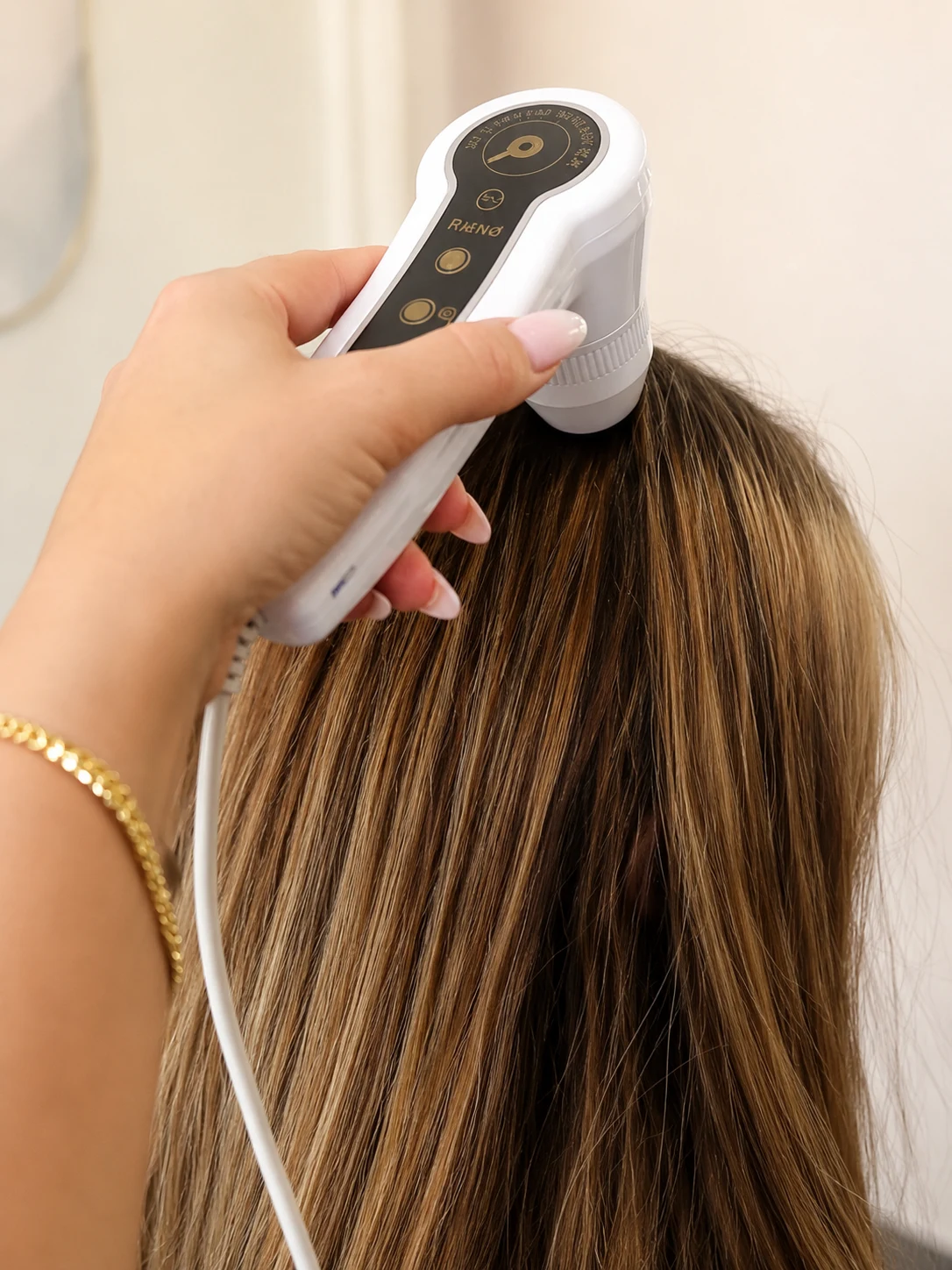
Most people put real effort into their hair and almost none into the scalp it grows from. A scalp treatment cleanses away the buildup ordinary shampoo leaves behind, unclogs follicles, and improves circulation — creating the healthiest possible foundation for hair to actually grow well. It is maintenance for the part of the routine everyone skips.
I recommend this service more than almost any other, precisely because it is the one clients are least likely to ask for on their own. Here is what it actually does and why it matters more than most people assume.
Healthy hair is not a product result. It is a scalp result — everything else is working with whatever foundation the scalp provides.
What actually happens during the treatment
It starts with a clarifying step to lift product buildup, excess oil, and residue that regular shampoo does not fully clear. From there, a targeted mask, serum, or scalp exfoliant is applied based on what your scalp specifically needs — oily and congested calls for something different than dry and flaky. A scalp massage throughout stimulates circulation, which is where a real part of the benefit comes from.
Why circulation matters more than people think
Hair follicles rely on blood flow to deliver the nutrients that support healthy growth. Massage and stimulation during a treatment improve that circulation directly, which means follicles are better supplied — the same reason scalp massage on its own, done consistently, has real supporting benefits.
Why buildup is a bigger problem than it seems
Product residue, excess sebum, and dead skin cells accumulate at the scalp over time, and that buildup can clog follicles — creating exactly the kind of environment that leads to thinning, slower growth, or irritation. A clarifying treatment clears that away in a way daily shampoo, used on its own, generally cannot keep up with.
Who this actually helps
- Frequent styling product users — buildup accumulates fastest here.
- Oily or flaky scalps — both benefit from regular rebalancing.
- Anyone noticing thinning — supportive, not curative, but a genuinely useful part of an overall approach.
- Extension wearers — a healthy scalp protects the skin around bonds and supports long-term wear.
Honestly, almost anyone benefits — this is not a service reserved for people with an obvious problem.
What it is not
I want to be upfront about this: a scalp treatment is a supportive, cosmetic service, not a cure for significant hair loss and not a replacement for a dermatologist or a medically approved treatment. Think of it as one part of an overall hair-health approach — clearing buildup and improving the scalp environment — rather than a stand-alone fix.
I would rather tell you honestly what this service does than oversell it. It supports healthy hair. It does not replace medical care.
How often it is worth booking
Every 4 to 6 weeks works well for most people. If your scalp runs oily or flaky, more frequent visits can help keep things balanced; if your scalp is generally calm, less frequent maintenance is completely fine. Many of my extension clients pair a scalp treatment with their appointment the visit before a new install, giving their scalp the best possible starting point.
Curious how this fits with extensions specifically? Read how long tape-in extensions really last for how scalp health factors into wear time. Otherwise, the best next step is to book a scalp treatment and let your hair start from a healthier foundation.
Frequently asked
What actually happens during a scalp treatment?
A clarifying step removes product buildup, oil, and residue that ordinary shampoo leaves behind, followed by a targeted mask or serum and a massage to stimulate circulation. The exact combination depends on whether your scalp runs oily, dry, flaky, or sensitive.
Can a scalp treatment actually help my hair grow?
It supports the conditions hair growth needs — better circulation, unclogged follicles, and a balanced scalp — rather than directly forcing growth. Think of it as clearing the ground so healthy hair has the best possible environment to grow in, not a stand-alone growth treatment.
Who benefits most from scalp treatments?
Almost anyone, honestly — but especially people who use a lot of styling product, have an oily or flaky scalp, are noticing thinning, or wear hair extensions and want to protect the skin around the bonds.
How often should I get one?
Every 4 to 6 weeks for most people. If your scalp runs oily or flaky, more frequent treatments can help; if it is generally balanced, less frequent maintenance is fine.
Is a scalp treatment a replacement for medical hair loss treatment?
No, and I am always upfront about that. It is a supportive, cosmetic service — genuinely valuable for scalp health — but it is not a substitute for a dermatologist or an FDA-approved treatment if you are dealing with significant hair loss.
Ready to talk through your hair?
Book a scalp treatment