
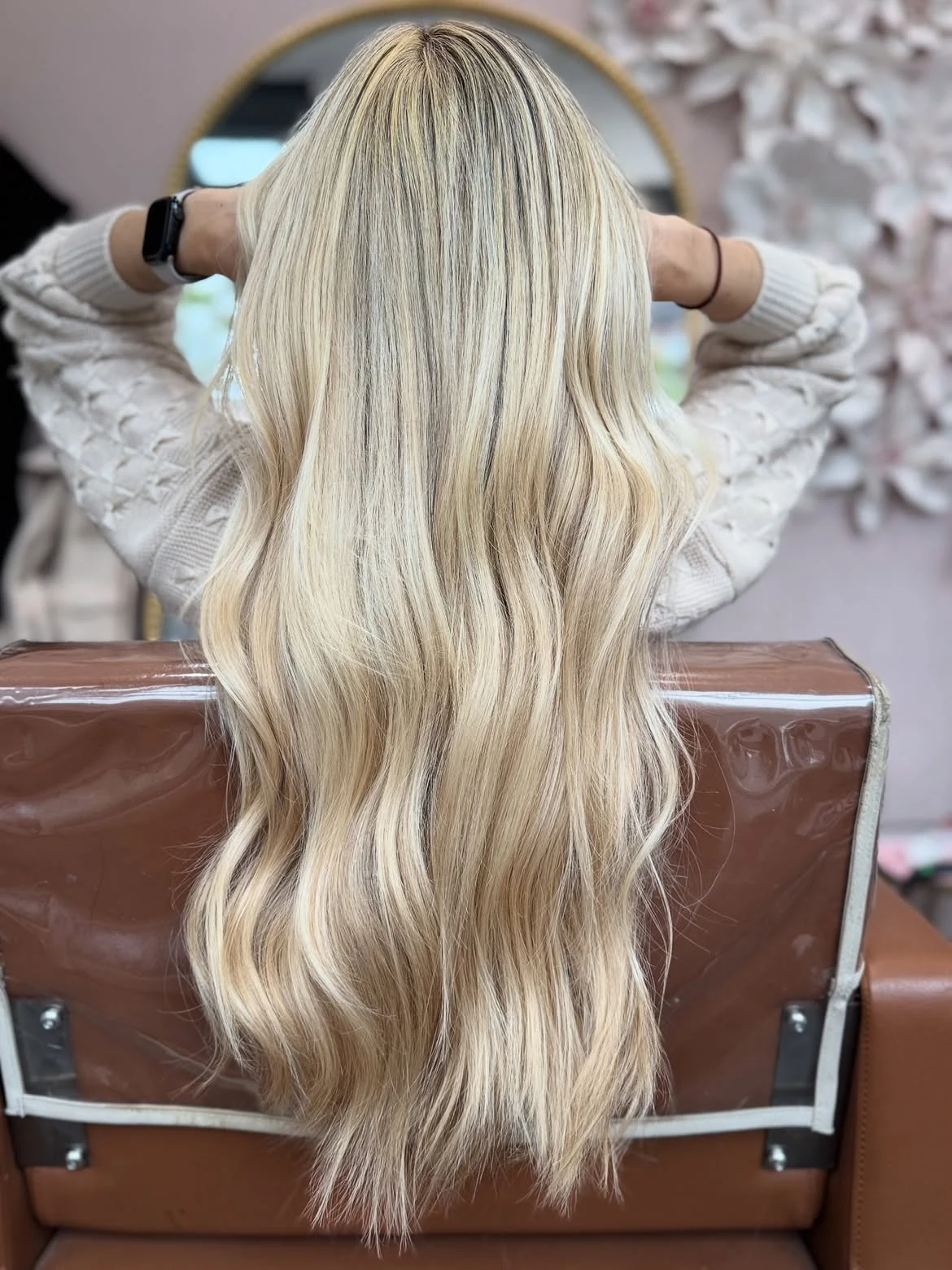
Brassiness is not bad luck, and it is not a sign your colour was done wrong. It is chemistry — the warm undertone that was always in your hair resurfacing as the cool toner on top of it gradually fades.Once you understand that, it stops being mysterious and becomes something you can actually manage between appointments.
This is one of the most common concerns I hear from lightened-hair clients, so here is what is actually happening and exactly what I recommend to slow it down.
Brassiness is not your colour failing. It is your colour fading in a completely predictable way — which means it is completely manageable.
What is actually happening
Every strand of hair contains natural pigment, and lightening removes the darker tones first, working through a predictable sequence toward warmer, yellow-to-orange undertones the further it is lifted. A toner is applied on top to neutralize that warmth and create the cool, clean result you leave the salon with. Toner is not permanent — it fades faster than the underlying lift does, which is exactly why the warmth starts to reappear weeks later. That reappearance is brassiness.
What speeds it up
A handful of everyday factors accelerate how fast toner fades:
- UV exposure — sunlight breaks down toner molecules directly, which is why brassiness often shows up faster through summer.
- Heat styling — regular use of hot tools speeds up the same fading process.
- Sulphates and harsh cleansers — strip toner out of the hair shaft faster than a gentle formula.
- Hard water and mineral buildup — see below, this one is bigger than most people realize.
The Vancouver factor most guides never mention
Vancouver's water runs harder than average, and hard water leaves mineral deposits — iron especially — on lightened hair. Those minerals can cast a warm, sometimes orange tone over time, entirely separate from how your colour was formulated or how well you are caring for it otherwise. It is one of the most common reasons a client's colour reads warmer here than it did somewhere with softer water. A clarifying wash every few weeks lifts that mineral buildup before it has a chance to tint the hair.
How purple shampoo actually helps — and its limits
Purple sits directly opposite yellow on the colour wheel, so it neutralizes warm tones the same way an in-salon toner does, just far more gently and gradually with repeated use. It is genuinely useful as maintenance between appointments. It is not, however, a substitute for professional toning — and overusing it can leave hair looking dull, flat, or slightly ashy rather than the intended cool, bright tone.
The maintenance routine that actually works
- Use a purple or blue-toning shampoo once or twice a week — not daily.
- Add UV protection to your routine, especially through spring and summer.
- Keep heat styling moderate and always use a heat protectant.
- Switch to sulphate-free formulas to slow toner loss.
- Do an occasional clarifying wash to clear mineral buildup, particularly here in Vancouver.
- Book a gloss between full colour appointments to refresh tone without a full lightening service.
The clients whose colour stays coolest longest are not avoiding brassiness. They are simply staying ahead of it with a routine.
How often to come back in
Most clients with foiled highlights are back every 4 to 6 weeks. A gloss appointment between full colour services extends that window further and keeps tone looking fresh without redoing the lightening work each time.
If you are still deciding between techniques, balayage vs highlights for fine hair is worth reading first — the maintenance routine above applies to both. When it is time for a refresh, book a consultation and we will get your tone back to where it should be.
Frequently asked
Why does lightened hair turn brassy in the first place?
Lightening hair removes darker pigment and exposes the warm, yellow-to-orange undertone that was always underneath it. Brassiness is not damage or a mistake — it is that underlying warmth resurfacing over time as the cooler toner fades.
How does purple shampoo actually work?
Purple sits opposite yellow on the colour wheel, so it cancels warm tones the same way a toner does — just gently, over repeated use. It is maintenance, not a substitute for in-salon toning, and using it too often can leave hair looking dull or slightly ashy.
Does Vancouver water actually affect brassiness?
Yes. Vancouver's water is on the harder side, and mineral deposits — iron in particular — can build up on lightened hair and cast a warm, sometimes orange tone over time, independent of how your colour was formulated.
How often do I need to get toned or glossed?
Most clients with foiled highlights come in every 4 to 6 weeks. A gloss between full colour appointments extends that further and keeps tone fresh without a full lightening service.
What is the single best habit for preventing brassiness?
Consistent UV protection and heat protection, paired with a sulphate-free routine. Sun exposure and heat styling both accelerate the fade of cool toner, which is what lets the underlying warmth show through faster.
Ready to talk through your hair?
Book a consultation