
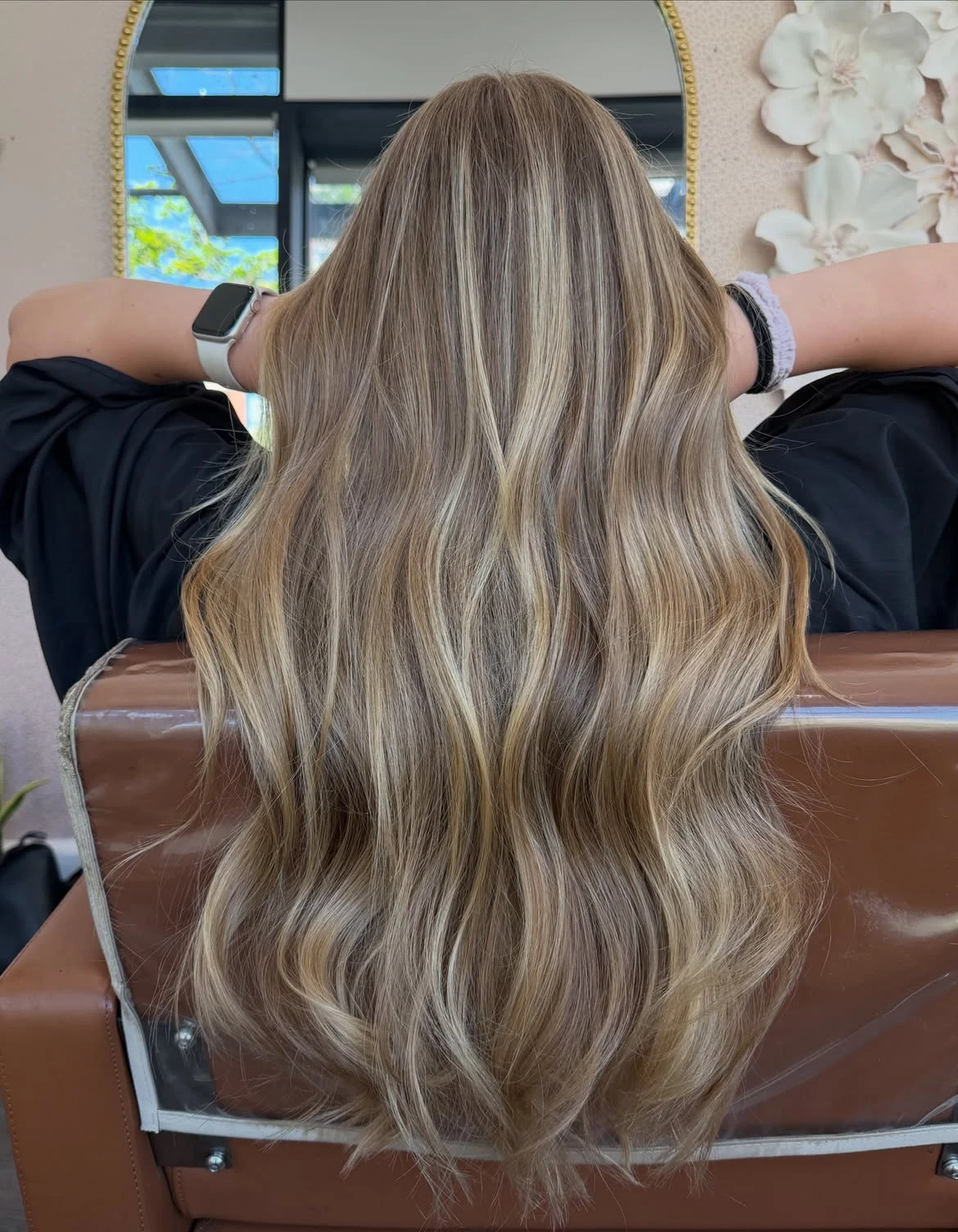
Both techniques lighten hair. They do it in completely different places and completely different ways, and that difference is exactly why one tends to suit fine hair better than the other. Highlights build dimension from the root outward using foil. Balayage sweeps colour onto the surface, mostly from mid-shaft to the ends. For most fine hair, that root-outward structure of highlights is what actually reads as volume and depth.
This is one of the most common questions I get from clients with fine hair specifically, so here is the honest, technique-first answer rather than a marketing one.
Balayage looks effortless because of where it lives on the hair. Highlights look full because of where they live. On fine hair, that difference is everything.
How each technique actually works
Highlights
Sections are lifted with a pick, saturated with lightener from root to tip, and wrapped in foil while the colour develops. This creates a structured, repeatable pattern of lighter pieces woven through the hair — more contrast, more uniform brightness, and visible dimension close to the scalp.
Balayage
French for "to sweep." Lightener is hand-painted directly onto the surface of random sections, applied lightest at the ends and built up toward the mid-shaft, with no foil. The result is a soft, natural gradient with no hard line where it grows out.
Why highlights tend to win on fine hair specifically
Fine hair benefits from contrast close to the scalp — it is what tricks the eye into reading as fuller and more textured. Highlights are built from the root outward, which does exactly that. Balayage, by design, lives mainly in the mid-lengths and ends. On hair that is fine or on the shorter side, there is simply less length for that soft, ends-weighted gradient to fully develop, and it can read as flat or sparse rather than sun-kissed.
That said, this is a tendency, not a rule. Longer, denser fine hair can absolutely carry balayage beautifully — it comes down to your actual length and density, which is exactly what I assess before recommending either.
Maintenance: the trade-off worth knowing
Balayage is the lower-maintenance option overall, since there is no root regrowth line to manage — the colour simply grows out softly. Highlights show regrowth more visibly at the root and typically need a salon visit every 4 to 6 weeks to stay looking intentional. Neither is right or wrong; it is a real trade-off between visit frequency and the kind of dimension you are after.
What I actually recommend
For fine hair that wants visible dimension and volume, particularly on shorter or medium lengths: highlights. For longer, denser fine hair, or for clients who want the lowest-maintenance option and are comfortable with a subtler effect: balayage is a genuine option worth considering. And for a lot of my fine-haired clients, the actual answer is both — foiled highlights near the root for structure, balayage woven through the ends for softness. It is one of my favourite combinations precisely because it avoids over-processing any one section.
The best result on fine hair rarely comes from choosing one technique over the other. It comes from using each one where it actually works best.
The one thing that matters more than the technique
Whichever route you take, keeping lightened fine hair looking healthy depends heavily on what happens between appointments — the wrong products or unmanaged brassiness will undo good colour work faster than the technique itself matters. I have written a full breakdown of why highlights turn brassy and how to stop it, which is worth reading regardless of which technique you choose.
The most accurate way to know which is right for your hair specifically is to book a consultation, where I can look at your length, density, and condition directly.
Frequently asked
What is the actual difference between balayage and highlights?
Highlights use foil — sections are lightened root to tip and wrapped, creating a structured, more uniform brightness. Balayage is hand-painted freehand onto the surface of the hair, usually concentrated from mid-shaft to ends, creating a softer, sun-kissed gradient with no hard regrowth line.
Why do highlights often look better on fine hair?
Highlights build dimension from the root outward, which creates the visual illusion of more density and texture — something fine hair benefits from. Balayage lives mainly in the mid-lengths and ends, and on finer, sometimes shorter hair there is less length for that gradient to read clearly.
Which technique requires less maintenance?
Balayage, generally. Because the colour is concentrated away from the root, there is no harsh regrowth line and touch-ups are less frequent. Highlights show regrowth more visibly and usually need a salon visit every 4 to 6 weeks.
Can I combine both techniques?
Yes, and it is one of my favourite combinations for fine hair — foiled highlights for structured brightness and dimension, with balayage woven through for a softer transition at the ends. It gives you the best of both without over-processing the hair.
Is one technique more damaging than the other?
Both involve lightener, so some damage potential exists either way. Highlights tend to require more frequent salon visits over time, which adds up. Balayage often needs a stronger lightener in a single sitting since it works faster and closer to the surface. The healthier approach depends on your hair condition and how it is maintained between appointments — this is exactly what we assess at consultation.
Ready to talk through your hair?
Book a consultation